

PicoLazer Suffolk, VA


A Smarter Way to Treat Pigment and Texture
Dark spots can linger long after a breakout has healed or summer sun has faded. Acne scars and uneven texture can be even harder to improve with skincare alone when the problem sits below the surface. PicoLazer gives us a precise way to break apart unwanted pigment and stimulate collagen, helping the skin look clearer and feel smoother without a long recovery. At Clarity Acne & Aesthetic Dermatology in Suffolk, VA, we adjust each treatment to your goals, whether that’s fading a single stubborn spot or building a broader plan for melasma or acne scarring.
What Is PicoLazer?
PicoLazer is a dual-wavelength laser from Rohrer Aesthetics. It delivers quick bursts of energy, each lasting just a picosecond, or one trillionth of a second. These short pulses create pressure waves that break up pigment or tattoo ink into tiny pieces, which your body can gradually remove.
Because the pulses are so fast, less heat spreads to the surrounding skin. PicoLazer usually causes less thermal damage than older lasers, which means less irritation and a lower risk of heat-related problems.
PicoLazer also offers a fractional treatment mode. Rather than treating the entire surface, it creates tiny treatment points beneath the skin. This process encourages your skin to produce and reorganize collagen. Over the following weeks, this collagen remodeling can help soften acne scars, shrink pores, smooth texture, and reduce fine lines.

PicoLazer can address many skin concerns, but not all pigmentation is the same. Sun spots, acne marks, and melasma each require different settings and realistic expectations.
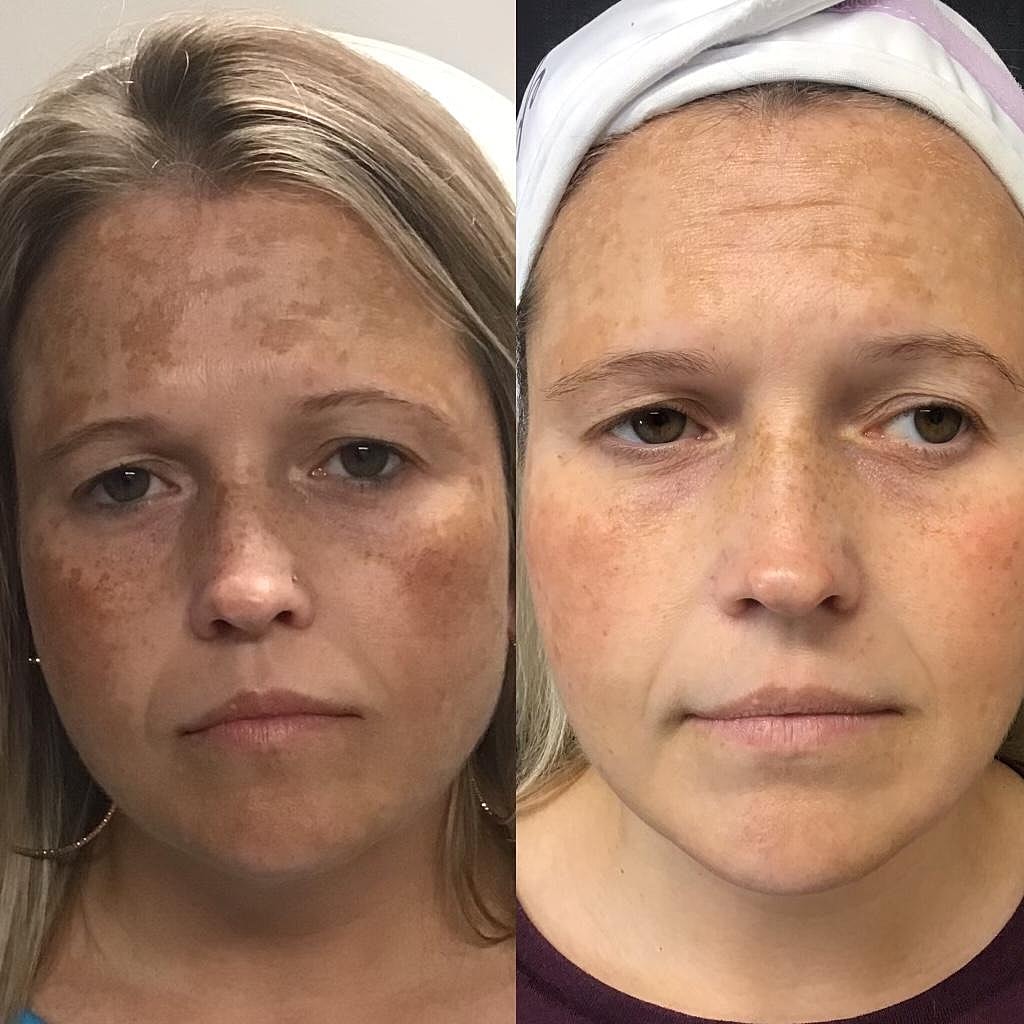
PicoLazer targets pigmentation caused by concentrated melanin. The laser breaks that pigment into smaller particles, allowing the body to clear it. This can help fade sun spots, age spots, freckles, and other discoloration linked to sun damage. The spot may darken right after treatment, then flake or fade as the skin heals.
Treating melasma requires patience. Hormones, sunlight, heat, and inflammation can cause it to return, so we cannot guarantee a permanent solution. PicoLazer may help even out your skin tone when combined with sunscreen and proper home care.
Breakouts, ingrown hairs, and skin injuries can leave dark marks. This is post-inflammatory hyperpigmentation, or PIH, and it is more common in darker skin tones. PicoLazer targets pigment using less heat than many other lasers. We also treat active acne or ingrown hairs to help prevent new dark marks from forming.
Fractional PicoLazer treatments boost collagen production beneath the skin. This can help reduce shallow acne scars, support the skin around enlarged pores, and make rough skin feel smoother. Deep or tethered scars often need more than just laser treatment. Depending on the type of scarring, we might suggest subcision, microneedling, resurfacing, or another approach.
PicoLazer helps rejuvenate your skin by encouraging new collagen growth without removing the whole outer layer. For deeper wrinkles, Erbium or CO2 resurfacing may work better, so we’ll discuss all the options with you.
Our two PicoLazer packages address pigment and texture at different depths.
Awake & Ablate™ is for patients who want a stronger improvement in acne scars and rough texture without the recovery of aggressive resurfacing. This comprehensive treatment combines Pico Laser Deep with Light Erbium resurfacing. PicoLazer boosts collagen beneath the skin, while Light Erbium helps smooth the surface. We use this treatment for acne scars, enlarged pores, and uneven skin texture. It provides more improvement than a light laser facial but with less downtime than more aggressive resurfacing.
Lighten & Brighten™ helps clear stubborn discoloration and create a brighter, more even skin tone, especially for patients dealing with melasma or dark marks after acne. With this treatment, we combine PicoLazer with a VI Peel. The laser targets pigmentation, and the peel refreshes the skin’s surface. This option may work well for melasma, PIH, dark spots, and uneven skin tone. With the right approach, it can also be suitable for darker skin tones.
What Happens During a PicoLazer Treatment?
We start by examining your skin and discussing your goals. We’ll ask about your medications, previous laser treatments, sun exposure, and any history of pigment changes. We also determine your Fitzpatrick skin type and may do a patch test if your skin is sensitive.
On the day of your treatment, we clean the area and provide protective eyewear. Your provider selects the right wavelength, lens, spot size, and energy level. Most people feel quick snaps or a prickling sensation. Numbing cream is available for deeper treatments.
Most sessions take about 15 to 30 minutes, depending on the area. If you’re treating several areas or combining PicoLazer with another procedure, it may take longer.


PicoLazer Downtime and Results
You might notice some redness, warmth, or swelling after treatment. Mild redness usually fades in a few hours. Deeper treatments can leave your skin pink or rough for 24 to 48 hours or more. Pigmented spots may get darker before they lighten.
Some people notice brighter skin or lighter dark spots after just one treatment. Collagen takes longer to develop, so improvements in acne scars, pores, wrinkles, and texture appear gradually over several weeks as your skin heals.
Most people need two to four PicoLazer treatments, but the exact number depends on your skin concern, treatment area, skin tone, and goals. Scars and tattoos may require more sessions. Results can continue to improve even after your last treatment.
Is PicoLazer Safe for All Skin Types?
PicoLazer offers treatment options for all Fitzpatrick skin types, but the same wavelength isn’t suitable for every skin tone. The 1064 nm wavelength is indicated for benign pigmented lesions in Fitzpatrick skin types I–VI. The 532 nm wavelength has narrower indications for Fitzpatrick types I–III.
The 1064 nm wavelength often works well for darker skin tones, but every laser has some risks. Hyperpigmentation or hypopigmentation can happen, especially after recent tanning, poor sun protection, or if the settings aren’t right.
Why Choose Clarity Acne & Aesthetic Dermatology for PicoLazer?
PicoLazer doesn’t diagnose your skin or pick its own settings. The experience of your provider makes a big difference in your results.
Clarity is led by Deborah Quinn, DNP, FNP-BC, DCNP, a double board-certified Family and Dermatology Nurse Practitioner with over 18 years of experience. Our team understands the differences between active acne and acne scars, melasma and sun damage, and surface versus deeper pigment.
We also provide Clear + Brilliant, Erbium, IPL, and CO2 resurfacing treatments. If PicoLazer isn’t right for you, we’ll suggest another option that better fits your needs.
Schedule Your PicoLazer Consultation
Book a consultation at Clarity Acne & Aesthetic Dermatology in Suffolk, VA, to see if PicoLazer, Awake & Ablate™, or Lighten & Brighten™ is right for your skin concerns.
Many patients need two to four sessions. Dark spots may respond sooner, while acne scars and tattoo removal can take more treatments. We’ll estimate the number after we examine your skin.
Most PicoLazer treatments have minimal downtime. You may experience slight redness or warmth for a few hours. Deeper fractional treatments and combination packages can require 24 to 48 hours or more.
PicoLazer can be suitable for darker skin tones when we use the 1064 nm wavelength and settings that match the patient. Pigment changes are still possible, so we don’t describe any laser treatment as risk-free.
PicoLazer may help fade melasma, but melasma can return. Sun protection, home care, and maintenance treatments play a major role in keeping the skin even toned.
Most patients feel mild discomfort that resembles quick snaps against the skin. Numbing cream may be used for sensitive areas or deeper treatment.
You may notice a brighter appearance or changes in dark spots after the first treatment. Skin rejuvenation, collagen growth, and scar improvement take several weeks.
PicoLazer can fade or remove tattoos by breaking ink into particles the body can clear. The number of sessions depends on the tattoo’s color, depth, density, age, and location. Some ink may remain.
Yes. Common treatment areas include the face, neck, and chest. PicoLazer can also treat selected skin concerns on the hands, arms, back, abdomen, and thighs.

(757) 977-1077
Monday - Thursday: 9AM - 4PM
Friday: 9AM - 2PM
Second Saturday of the month: 9AM - 12PM


